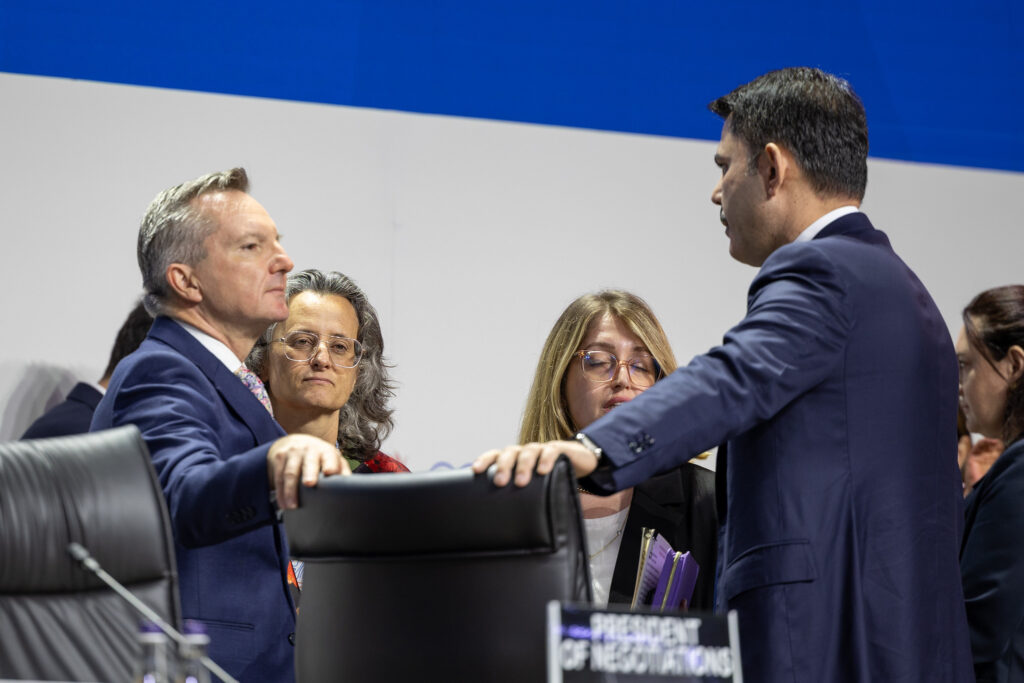
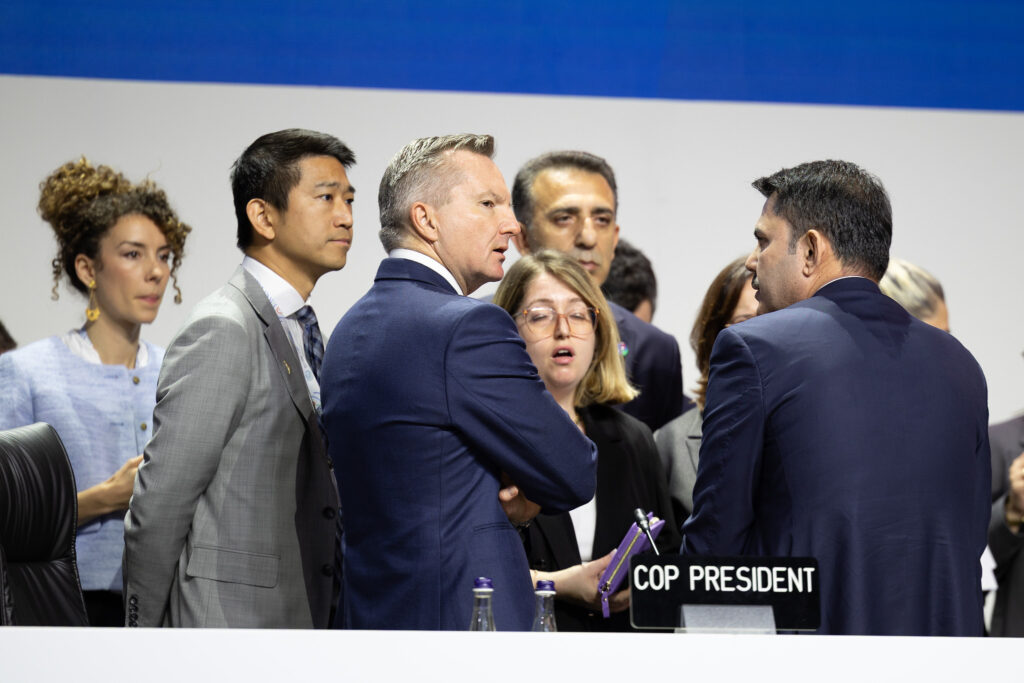
If anything was uncommon about this COP, it was its shared presidency. Last year, Turkey and Australia failed to agree on who to host the talks and ended up as co-presidents in an unprecedented arrangement mediated by UNFCCC. Turkey’s Murat Kurum would serve as COP31 President, and Australia’s Chris Bowen would lead the negotiations. This unusual structure drew sharp criticism from veteran observers, who argued that the joint leadership struggled to project unified authority, allowing procedural bottlenecks and competing draft texts to fester until the final hours.
While that was somewhat managed, the substance of the talks wasn’t. The uphill task of delivering a deal remained.
Weeks before the conference opened, the United Nations Environment Programme confirmed that global temperatures were now officially on course to breach the critical 1.5-degree-Celsius threshold established under the 2015 Paris Agreement. The planet had slid into the era of overshoot. Then COP31 came, and instead of galvanising rapid consensus, this grim scientific reality hardened geopolitical fault lines.
Two weeks of gruelling diplomacy, sleepless nights for negotiators and observers, and frantic closed-door haggling, the talks went into overtime after the Friday deadline failed to deliver a deal. For two days, negotiators battled over language on transitioning away from fossil fuels, climate finance, tripling of adaptation finance, just transition, and climate science timelines. A closing plenary on Friday night was suspended as Parties fiercely clashed over the draft cover decision. The COP31 Presidency promised a new text by the following morning. This never came. Until dawn on Sunday.
Later that day, the co-presidents presented to exhausted delegates a heavily watered-down compromise text dubbed the ‘‘Antalya Pact’’. While it acknowledged for the first time that global warming would likely overshoot 1.5 degrees Celsius, it relied on calls for accelerated carbon removal technologies and a global electrification target rather than emissions cuts at the source. Countries rejected the outcome, forcing President Murat Kurum to announce that consensus could not be reached. This ended an infamous COP that not only failed to deliver a political pact but also became the longest in UN history.
Ironically, Australian Minister Chris Bowen had told reporters on Friday that overtime at a COP is a ‘‘broad concept’’ and that the Presidency would guide Parties to a consensus. In the end, none was achieved. The summit went into overtime, and the proposed Antalya Pact collapsed without adoption.
Minister Kurum was unapologetic in his assessment, saying: ‘‘We did everything we could. You should not hurt people in the world [by] just being hung up on one word or phrase.’’ In the end, his presided COP hurt more people on the planet for failing to mention the problem: fossil fuels.
While Australia’s co-President Bowen blamed the current geopolitical climate for lack of a consensus, the COP’s failure raises deeper questions about nations’ ability to work together to slow an intensifying planetary crisis. For developing countries, this breakdown carries profound consequences for lives, livelihoods, ecosystems, economies, and the future.
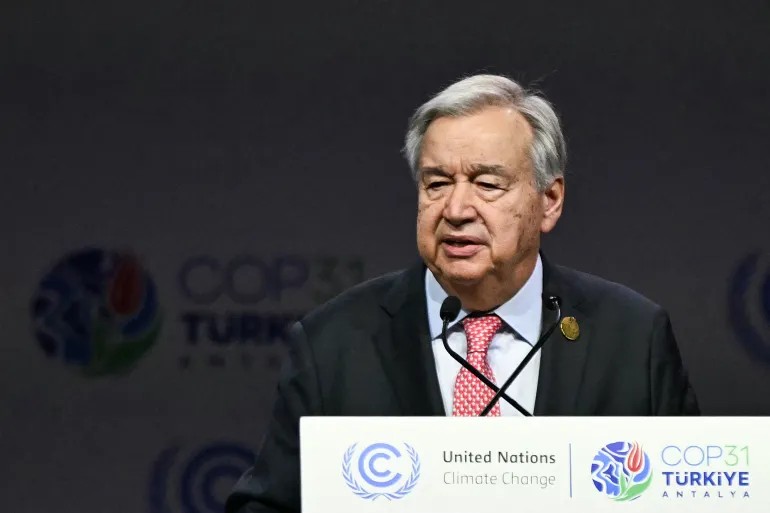
‘‘I share the very profound frustration of all those who expected governments to rise to the moment the climate crisis demands…There may be no consensus in the negotiating room. [But] there is no ambiguity in the science. Temperatures keep shattering records.’’
—Antonio Guterres, UN Secretary-General
The fossil fuel question
At the heart of the marathon was a series of disputes that defied diplomatic mediation. Among them was the existential question of fossil fuels. Having secured a landmark pledge at COP28 in Dubai to transition away from coal, oil, and gas, climate-vulnerable nations arrived in Antalya determined to turn that promise into an actionable, time-bound phaseout. In its first 18-page draft decision on Monday, November 16, the COP31 Presidency had explicitly mentioned the primary cause of the climate crisis: fossil fuels. In paragraph 66, the draft cover decision called for ‘‘accelerated action to phase out fossil fuels, including through the immediate transition away from fossil fuels in energy systems.’’
But the supposed victory was short-lived. When the second draft decision came three days later, it omitted any explicit mention of fossil fuels. Petrostates, led by Saudi Arabia and the Arab Group, lobbied relentlessly to scrub any direct mention of fossil fuels from the agreement, pushing instead to reframe the global mitigation strategy around carbon capture and storage (CCS) and speculative carbon-removal technologies.
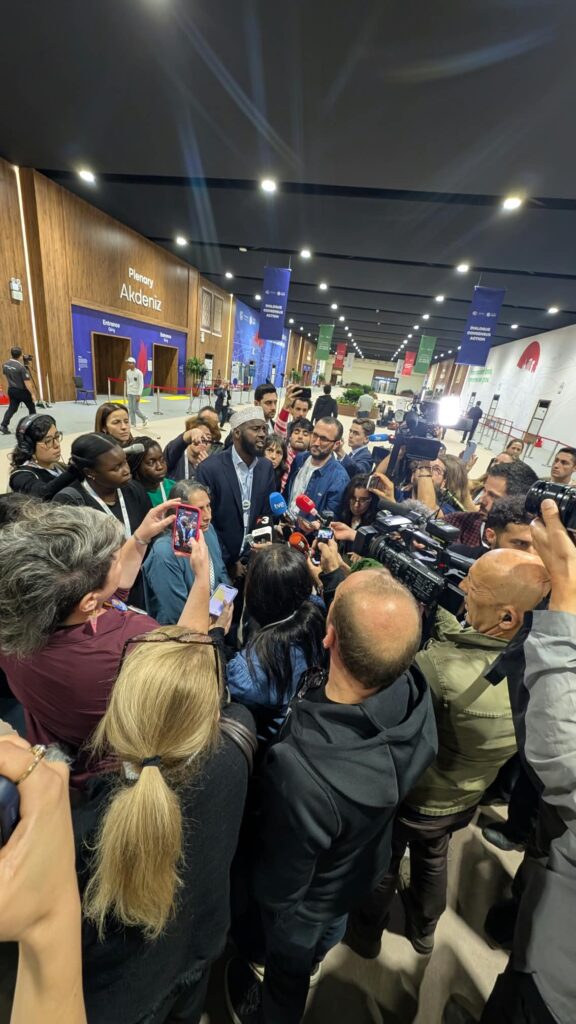
Parties and campaigners denounced this development as a dangerous distraction designed to prolong the era of fossil fuels. Director of Power Shift Africa Mohamed Adow said promoting ‘‘unproven and eye-wateringly expensive’’ carbon removal technologies hands the fossil fuel industry a lifeline.
‘‘These climate summits should be about accelerating the demise of fossil fuels, not letting them tout far-fetched schemes that act as get-out-of-jail-free cards.’’
—Mohamed Adow, Director, Power Shift Africa
The European question – cynicism and hypocrisy
While the EU rejected the outcome for failing to mention fossil fuels, the bloc was criticised for its pessimism and attempts to sabotage the process. ‘‘Just because the EU rejected a text does not make them climate champions,’’ said Brandon Wu, the director of policy and campaigns at ActionAid USA. Wu observed that the EU’s fossil fuel phaseout roadmaps are ‘‘restatements of existing policy at best’’ and inconsistent with the 1.5C temperature goal.
He added: ‘‘The EU came with explicitly no intention of negotiating in good faith on finance, just transition, and adaptation, [all] priorities for the Global South.’’
Adow said that the bloc cannot wash its hands of the wreckage it had helped create in Antalya. ‘‘The EU cannot sabotage the negotiations, then pose as the climate conscience of the world,’’ Adow said, adding that this amounts to abandonment of the world’s poor and climate-vulnerable countries by the wealthy nations most responsible for the crisis.’’
The money question – failed implementation, accountability
Developing countries went to the negotiations demanding concrete delivery plans for adaptation and loss-and-damage funding from their developed counterparts as outlined in outcomes of past COPs, including 29 and 30. They made it clear that finance must be grant-based public funding with clear baselines, rather than vague pledges or debt-heavy loans. That would ensure implementation took off and guarantee accountability in climate finance. Again, Antalya failed.
Climate Finance Advisor at Power Shift Africa, Saada Mohamed, says the continent didn’t go to Antalya to demand new headline climate finance goals. Those commitments already exist, she says, referencing the US$300 billion New Collective Quantified Goals (NCQG) agreed in Baku, and the commitment to triple adaptation finance flows by 2035 endorsed in Belém.
She adds: ‘‘What Africa needed from COP31 was simple: a credible implementation and accountability mechanism to ensure these commitments translate into scaled-up, predictable, and grant-based public finance, consistent with developed countries’ obligations under Article 9.1 of the Paris Agreement.’’
In that regard, this COP failed, with negotiations ending in procedural outcomes that lacked substantive progress.
‘‘The weak outcomes on the Climate Finance Work Programme, the commitment to triple adaptation finance, and the capitalisation of multilateral climate funds continue to widen the critical gaps in both finance delivery and accountability.’’
—Saada Mohamed, Climate Advisor, Power Shift Africa
The science question – standoff over limiting 1.5°C overshoot
Being the first COP in the era of overshoot, many expected it to rally the world around collective action to reverse or blunt the acuteness of the temperature breach. Ironically, even on science, Parties couldn’t agree. The proposed cover decision showed minor progress in limiting this breach or recognising the role of science in the climate process. A major fault line was the publication of IPCC’s 7th Assessment Reports. Dozens of nations, including the European Union, the Alliance of Small Island States, and the Least Developed Countries group, wanted all parts of the AR7 published before the 2028 Global Stocktake to ensure that the latest science influences global climate policies.
Conversely, others like Saudi Arabia, China, India, Russia, and Kenya pushed to delay the report’s completion until 2029, maintaining that slowing the process is necessary for equitable and meaningful participation from resource-limited scientists in developing countries. Critics and climate-vulnerable nations argue that postponing the report would leave the 2028 stocktake less informed.
COP31’s collapse exposes the acute vulnerability of developing nations within a consensus-based multilateral system where a handful of powerful actors can paralyse global progress. Without guaranteed, predictable public finance flowing from wealthy emitters, low-income and climate-vulnerable countries are left to confront escalating droughts, floods, and rising seas largely on their own.
Worryingly, the diplomatic wreckage in Turkey now shifts an immense burden onto COP32 next year. As Adow said, Africa will have to sort out the mess left by the COP31 Presidency. ‘‘Hopefully, a COP held on the front line of the climate crisis will focus minds.’’
James Kahongeh leads media and communications at Power Shift Africa