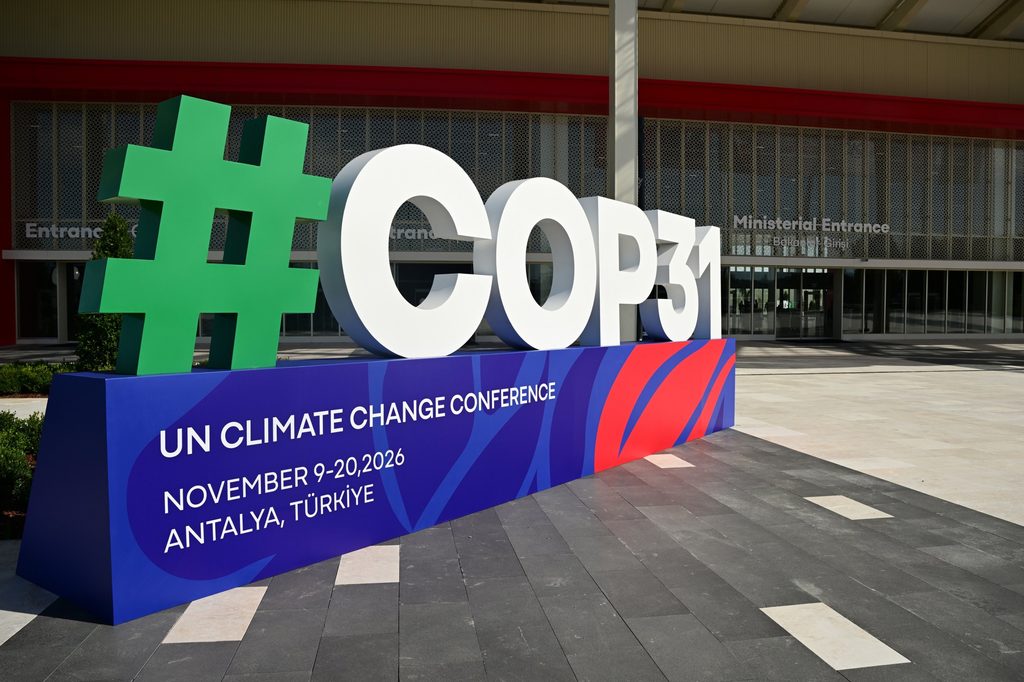
A silent battle is raging at COP31, pitting nations over climate science. At the centre of the battle is the Intergovernmental Panel on Climate Change (IPCC), the UN body tasked with providing governments worldwide with objective scientific information to help shape climate policies.
The dispute is over the publication schedule for its upcoming Seventh Assessment Report (AR7).
Formed in 1988 by the World Meteorological Organisation (WMO) and the UN Environmental Programme (UNEP), the body does not conduct original scientific research or monitor climate data directly. Instead, thousands of volunteer scientists globally review thousands of peer-reviewed scientific papers published each year. A team of independent experts rigorously reviews these drafts before unanimously approving them. This unusual design gives IPCC reports political weight. After all, no government would dismiss conclusions it has signed off. The body’s 2018 report on 1.5°C, requested by governments after the Paris Agreement, shaped the goal that now anchors climate diplomacy.
From these papers, the IPCC produces comprehensive major assessment reports every 5 to 7 years, covering the physical science of climate change, its environmental and societal impacts, future risks, and strategies for adaptation and mitigation. Findings from IPCC reports serve as the scientific foundation for international climate negotiations, such as the COP, and help inform global policy, including renewable targets, adaptation, and finance gaps.
Stalemate at COP31
So, what’s the fight about, and how is this shadowing climate talks in Antalya?
The current fight stems from a disagreement over when the next IPCC report should arrive. Dozens of European, African, and Pacific countries want the next set of IPCC reports ready to inform the 2028 global stocktake (GST2). At the same time, Saudi Arabia, China, India, Russia, and Kenya want the seventh assessment report delayed until 2029.
China and India are the biggest and third-biggest emitters, respectively, accounting for more than 38 percent of the total global emissions. Saudi Arabia is the world’s largest oil exporter. Russia is a major exporter and consumer of fossil fuels.
Proponents of this delay argue that an accelerated timeline to meet a 2028 deadline risks rushing the scientific drafting and review process. They also claim that resource-limited countries and scientists from the Global South could struggle to manage the massive volume of technical literature and government review cycles within a compressed window. The secretariat estimates that about CHF 33 million (US $39 million) is needed to finish the cycle. Since 2024, the United States has contributed nothing. That was before Washington left both the UN climate convention and the IPCC.
They also claim that the IPCC’s scientific literature and modelling have historically been dominated or skewed by researchers from developed nations such as the US, UK, and the EU. They now want more time for the cycle to ensure broad and equitable participation from scientists from developing countries.
What happened in Addis Ababa?
In October, an IPCC meeting in Addis Ababa, Ethiopia, was suspended owing to disagreements over the work plan for the 7th assessment report and budget. This was the fifth time countries had failed to agree on when the reports should be completed. Many had expected that the session in Addis Ababa would be the final opportunity for countries to agree on the schedule. That was never to be.
Meanwhile, critics counter that rescheduling the release makes the stocktake less informed, not fairer. The EU has been particularly vocal on the issue, vowing to fight for science and accusing some countries of undermining the world’s leading authority on global warming.
“There are some parties that are trying to undermine what science is telling us because they don’t want to do what it takes to address climate change.”
—Diana Acconcia, Director for International Affairs and Climate Finance, European Commission
Why Antalya matters
COP31 marks the official launch of the second Global Stocktake, due to conclude in 2028. Governments have already settled on the 2029 release of the AR7 Synthesis Report. If they land after the stocktake’s technical work, negotiators will assess the world’s progress using figures that are years old. Climate scientists say that updated figures are more appropriate than older figures
Decisions at COP require consensus among nearly 200 nations. Observers doubt the dispute can be settled in Antalya. This could see a push to recognise the role of IPCC science in the final deal. This would put pressure on governments to acknowledge the need to support its work ahead of its crucial meeting in December. During the virtual meeting, member governments are expected to resolve the October deadlock and reach consensus on the work plan and the budget. That’s why COP31 must send the right signal.
Observers fear that a full-blown dispute could create operational challenges and reputational risks for the panel whose real infrastructure is goodwill. This has prompted about 120 AR7 scientists to sign an open letter pledging to keep working despite the dispute. In the open letter, the scientists warn that the stocktake should not proceed without updated IPCC findings.
The bigger problem
Experts don’t want the timing of scientific assessments to become a bargaining chip. They could deliberately delay release dates depending on their exposure to fossil-fuel decline. That would challenge the IPCC’s founding principle: governments commission the science, accept its independence, and then negotiate over what to do about it.
While Antalya is unlikely to resolve the date impasse, this week’s discussions will signal what’s to come in the next two weeks.
Did you know the IPCC shared the 2007 Nobel Peace Prize with Al Gore?
James Kahongeh is the Lead, Media and Communications at Power Shift Africa