The ambition builds on the call to triple renewable energy capacity by 2030 and tallies with the Presidency’s objective of raising electricity’s share of global final energy consumption to 35 percent by 2035. It’s open to governments, financial institutions, businesses and international organisations.
This ambition is welcome. The question for Africa, and for every country with untapped resources, however, is how to deliver it without repeating past mistakes. Kenya offers both the model and the warning.
What Kenya got right
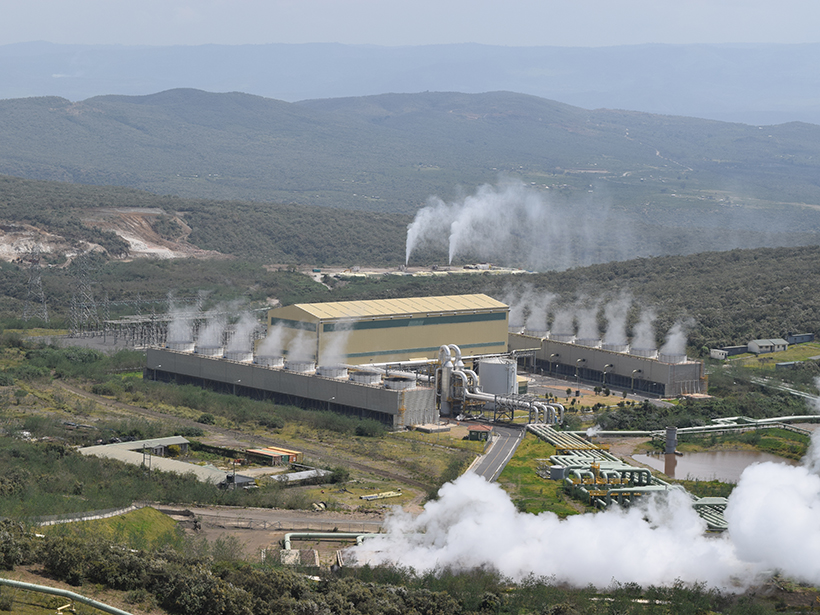
According to the latest report of Kenya’s energy regulator, renewable sources accounted for 81 per cent of electricity generated in Kenya mid this year. Geothermal is the largest single source at 41 per cent. The rise of geothermal was not accidental. As a historically hydro-dependent country, acute droughts in recent years have jolted Kenya into diversifying its energy mix, compelling the state to take the risk out of the ground.
Geothermal’s biggest barrier is exploration risk: drilling is expensive, and a dry well can sink a private developer. Through donor support and capacity building, Kenya built the most sophisticated geothermal complex in Africa. The state-owned Geothermal Development Company (GDC) mobilised investment and finance, absorbed the exploration risk and the high cost of capital, and drilled the wells itself, selling the steam to power generators. This is exactly the kind of institutional de-risking the global ambition calls for when it commits to measures that address exploration risk and improve access to affordable finance.
The lesson for other countries is that legal frameworks, a dedicated public institution, and patient development finance work together. None of the three is enough on its own.
From grid power generation to direct use
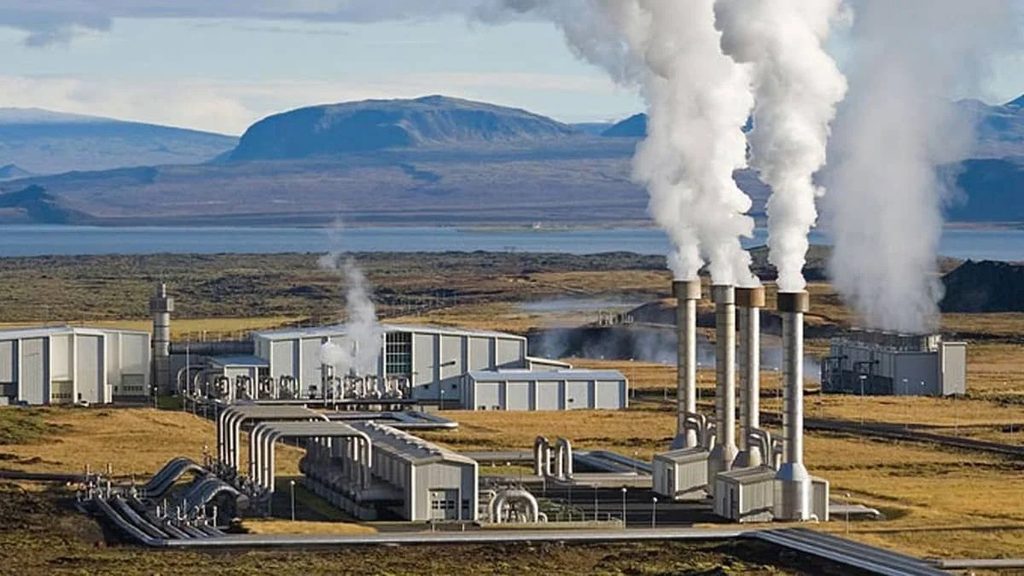
Kenya is now moving from power to direct use. Electricity is only part of geothermal’s value. Heat can be used directly, and Kenya has recently begun to do so. At its Menengai Geothermal Project in Nakuru County, GDC has rolled out direct-use pilots with support from development partners, including milk pasteurisation, aquaculture ponds, greenhouses, and laundry. GDC has also installed a semi-commercial cereal and grain dryer that can dry 20 tonnes of maize, wheat and barley a day. The project is funded with support from the Icelandic International Development Agency.
KenGen is developing the Green Energy Park at Olkaria, Naivasha, designed to use geothermal electricity, steam, and hot brine to attract industrial and manufacturing investments. It targets crop drying, milk processing, textiles, fish feed production, and other manufacturing plants. Meanwhile, the government is building an ambitious green hydrogen facility at the Olkaria geothermal field to produce fertiliser. The plant will also support steel manufacturing while positioning Kenya as a pioneer in Africa’s emerging green hydrogen market.
These examples matter for green industrialisation. Cheaper, more reliable heat on site means lower costs for farmers and processors, more value added locally, and jobs close to where resources are found.
What could go wrong
Geothermal has also caused harm, and the communities that live on top of the resource have too often borne it. Criticism of geothermal development globally includes high upfront capital costs, often financed by foreign loans on terms that add to host countries’ debt, exclusion of Indigenous Peoples and local communities (IPLCs) from planning and decisions, and lack of equitable benefit-sharing frameworks. In many cases, displaced communities are poorly resettled and inadequately compensated. Sometimes there is little involvement of communities in productive local uses of geothermal steam, such as farming, milling, and drying.
When renewable energy projects end up hurting rather than benefiting communities, that’s a problem. Communities should be rights-holders and partners in such projects. The global ambition commits to environmentally and socially responsible development that respects community rights, including Indigenous Peoples’ rights, and promotes meaningful participation and local economic benefits. Kenya’s experience shows that this commitment must be backed by enforceable rules and real money.
What developed countries must do
COP31 is a test of means of implementation. Voluntary ambition only becomes real if the finance, technology and capacity follow. To support developing countries in the design of their geothermal resources, developed countries should fund the risky early stage by providing grants and concessional finance for surface studies, test drilling and resource assessment. They must also capitalise exploration risk-mitigation facilities so that countries are not left to carry the riskiest phase alone.
They must also lower the cost of capital. Geothermal is capital-intensive, and high borrowing costs can erase its long-run price advantage. Development finance institutions and multilateral banks should offer long-tenure, low-cost finance, guarantees, and blended instruments. Support should come as grants and concessional finance, not new debt for countries already financially constrained.
Developed countries must also back public institutions, not projects alone. Strong GDC-type institutions are what make private investment possible. Support should build national institutions, regulation and skills, including workforce training and supply chains.
Crucially, support should promote scaling of direct use, not just generation. Direct-use projects such as crop drying, cold chains, aquaculture and agro-processing are small, productive and community-friendly. They are still pilots in Kenya. This could be scaled for large-scale deployment, drawing from Iceland, for instance, which uses waste heat and lower-temperature fluids directly for household heating, greenhouse agriculture, aquaculture, snow-melting, and industrial processes. Developed countries must, therefore, finance direct use at scale and let communities and local enterprises own and use them.
They must also make safeguards a condition for finance. Free, prior and informed consent is critical for projects. To be funded, projects must also be transparent and have equitable and enforceable benefit-sharing, fair resettlement and independent grievance mechanisms. For longer-term benefits, developed countries should share technology on fair terms by supporting research, demonstrating and exchanging knowledge on both established and next-generation geothermal technologies with developing countries.
Developed countries should deliver on their existing climate finance commitments, including the new collective quantified goal and the pledge to triple adaptation finance, and not repackage old money as new ambition. Importantly, they must keep the money predictable.
The five questions
COP31’s Geothermal Ambition will be judged by what it delivers, not what it promises. Who pays, who decides, who benefits, whose knowledge counts, and who bears the harm will determine its success or failure. Geothermal must put host communities at the centre. They must also help decide, share in the benefits, and use the heat for local economic activities. They must not be treated as obstacles to development or left to bear the social and environmental harms of geothermal projects.
Africa can lead on geothermal. Kenya has shown that public risk-taking, development finance, and clear legal frameworks can make geothermal the backbone of a national grid. It has also shown what happens when communities are neglected in the design. A global ambition that copies the first lesson and ignores the second will fail the people who live closest to the resource.
The launch of the Global Geothermal Ambition 2050 is an opportunity. Developed countries should meet it with money, technology, and respect for community rights, not just words.
Meshack Mboya is a Legal and Policy Advisor at Power Shift Africa