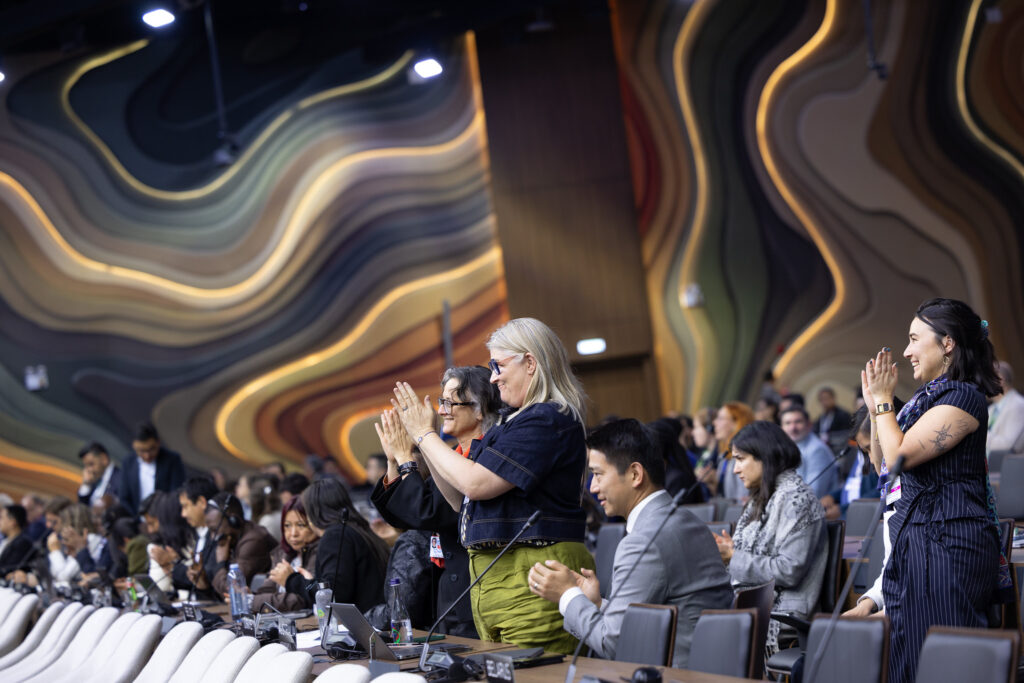
Last week, rich countries wanted to move the finance talks out of the adaptation room. The EU, UK and Norway said the baseline, quality and delivery of the tripling belong only in the Climate Finance Work Programme (CFWP). They refused to discuss finance in the Global Goal on Adaptation (GGA) negotiations.
The demand for grants could get watered down. The CFWP looks at the entirety of Article 9, not just Article 9.1, which is the clause that obligates developed countries to provide finance. Developing countries fear this could weaken the call for grant-based public money for adaptation.
Today, much of climate finance flows is debt. While total climate finance has grown over the years, loans still dominate several public finance channels. Developing countries are asking whether climate finance helps them carry out their plans or just compounds their debt.
Getting the money out is still the problem. Countries struggle to prepare projects; procedures are complex, approvals are slow, and borrowing costs are high. Being accredited to a fund does not automatically translate into receiving money. UN Climate chief Simon Stiell spoke of the “immense frustration” countries face in accessing finance.
‘‘Antalya must resolve the ambiguity surrounding the tripling of the adaptation finance target and acknowledge that adaptation finance needs of developing countries far exceed current levels of support,’’ says Patience Agyekum, the Adaptation Campaigner at Power Shift Africa.
So far, the GGA talks are stuck on who controls the indicators. Developed countries want an expert-only task force to work on the indicators. Developing countries want Parties to have political oversight. Our adaptation campaigner described it as “SB64 all over again”.
Says Agyekum: ‘‘The Global Goal on Adaptation should not be reduced to a technical exercise focused on indicators and metrics; it must be accompanied by the financial support required to enable effective implementation and meaningful adaptation action on the ground. Antalya will be judged by how it responds to this political test.’’
The Adaptation Fund was negotiated almost every day last week. It came up under three separate agenda items, and the talks focused on access, guidance and institutional arrangements. This makes the Fund’s future arrangements one of the concrete adaptation outcomes to watch this week.
As ministers arrive for COP31’s decisive second week, one message should guide the talks: money, and money alone, will protect lives and livelihoods in Africa.
As the director of Power Shift Africa told The Guardian, “You cannot protect a harvest with a pledge.”
Natalie Sifuma is the Adaptation Communications Lead at Power Shift Africa