When floodwaters sweep through communities, homes disappear, livelihoods are washed away and families are forced to leave behind everything they know. For thousands of people across Africa, this is no longer an occasional disaster, but a familiar reality of living with a changing climate.
During a single season in 2024, floods and landslides displaced more than 700,000 people across Kenya, Tanzania and Burundi. The devastation offered a stark reminder of what is at stake for a continent whose communities face mounting climate risks while often lacking the financial resources to prepare for them.
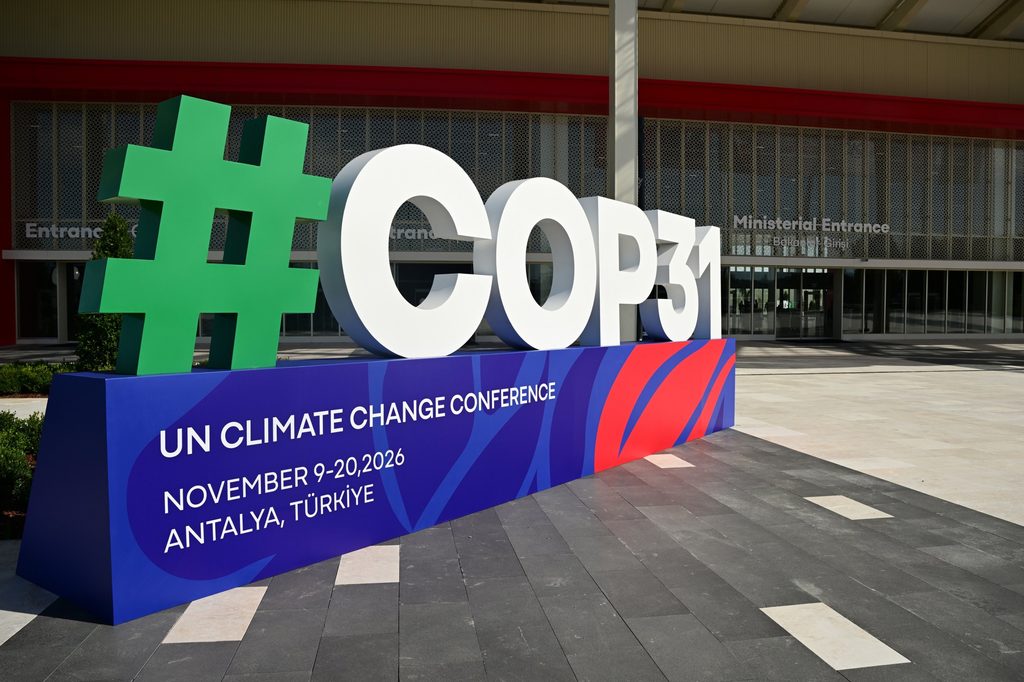
Against this backdrop, Africa approaches COP31 with a pressing question: can years of international climate negotiations finally deliver the support needed to help vulnerable communities adapt? The answer to that question depends on whether governments are willing to move beyond ambitious declarations and secure tangible progress on adaptation finance, national planning and the implementation of global climate commitments.
The challenge is considerable. Only 27 of Africa’s 54 countries have submitted National Adaptation Plans (NAPs), according to the UN Framework Convention on Climate Change’s NAP Central platform. These plans are essential for identifying climate risks and setting priorities, but preparing and implementing them requires technical expertise, institutional capacity and funding that many countries struggle to secure.
Meanwhile, international support for countries already experiencing climate-related losses remains far below the scale of identified needs. By September 2025, the Fund for Responding to Loss and Damage had received $397.74 million against pledges totalling $822.06 million. Across 119 countries, funding requests in the pipeline amounted to $2.8 billion. These figures reveal a troubling disconnect between the immediate need for climate action and the uncertain flow of the resources required to deliver it.
Making adaptation count
At the heart of Africa’s preparations for COP31 is the Global Goal on Adaptation (GGA), established under the Paris Agreement to strengthen countries’ capacity to adapt to climate change and build resilience. The goal is important because adaptation is about more than responding to disasters after they happen. It means helping farmers withstand prolonged droughts, strengthening infrastructure against floods, improving early-warning systems, and ensuring that communities can cope with climate shocks without losing their livelihoods.
Yet agreeing on how to measure progress has proved difficult. At COP30 in Belém, Brazil, countries adopted 59 Belém Adaptation Indicators, concluding two years of technical work under the United Arab Emirates–Belém work programme. The indicators were intended to help countries assess progress towards global adaptation goals.
But the agreement came with unresolved concerns. Both developed and developing countries questioned the final list and the process through which last-minute revisions were introduced without adequate contributions from Parties.
The dispute continued at the June 2026 Bonn meetings, known as SB64, where talks stalled over the governance and composition of a technical taskforce tasked with developing methodologies and metadata for the indicators. Countries also remained divided over whether the GGA negotiating text should explicitly refer to the COP30 call to at least triple adaptation finance by 2035.
For Africa, these disagreements go to the heart of whether global adaptation policy will reflect the realities of vulnerable countries or produce targets that are difficult to implement on the ground.Indicators may help measure progress, but they cannot build a flood barrier, restore degraded farmland or finance climate-resilient infrastructure. Without adequate resources, measuring adaptation risks becoming an exercise in documenting vulnerability rather than reducing it.
The money question
The call to at least triple adaptation finance by 2035 is therefore emerging as one of the most consequential issues facing African negotiators in Antalya. Developing countries have long argued that adaptation commitments must be matched by predictable, accessible and adequate finance. For countries facing competing demands on limited public budgets, the difference between a pledge and money actually delivered can determine whether a climate plan becomes reality.
Africa’s position is that the tripling commitment should be treated as an implementation obligation linked to the GGA and the wider New Collective Quantified Goal on climate finance. Negotiators will need clarity on the baseline against which the increase is calculated, the milestones for measuring progress, the relationship with the wider climate finance goal, and the types of finance that will count towards delivery. They are also likely to stress developed countries’ obligations under Article 9.1 of the Paris Agreement to provide financial resources to assist developing countries with mitigation and adaptation.
The underlying concern is that adaptation goals cannot be separated from the means required to achieve them. If countries agree on what resilience should look like but fail to agree on how it will be financed, the most vulnerable communities risk being left with ambitious international targets and few practical means of meeting them.
Shaping resilience discourse
Finance is only part of the challenge, as Africa also wants its experiences and expertise to shape the international frameworks intended to guide adaptation. The proposed technical taskforce responsible for refining the Belém indicators will play an important role in determining how progress is assessed, and African countries therefore have a strong interest in securing meaningful representation for experts from developing countries and least developed countries.
Their participation matters because climate vulnerability is not experienced uniformly. Indicators that work in one national context may fail to capture the pressures facing countries with limited infrastructure, large agricultural populations or constrained public institutions.
African negotiators are expected to push for a party-led process, balanced regional representation and strong oversight by governments, with technical experts and UN agencies providing support rather than replacing countries’ decision-making roles. The continent will also seek stronger links between the GGA, the Baku Adaptation Roadmap and the wider UN climate adaptation architecture.
Better coordination could help translate global agreements into national action, while making it easier to identify and address the political, technical and financial barriers that prevent countries from accessing adaptation support.
Climate funds, including the Green Climate Fund, the Global Environment Facility and the Adaptation Fund, will also come under pressure to provide dedicated support for developing countries implementing the United Arab Emirates Framework for Global Climate Resilience and its indicators.
A longer road to climate justice
For Africa, COP31 is both a negotiating challenge and an opportunity to define what successful climate action should mean for a continent already experiencing its consequences. The immediate priorities are how to protect the gains made on adaptation and loss and damage, secure credible financing commitments, ensure African experts help shape the indicators, and strengthen the institutions that connect global agreements with local implementation.
The stakes extend beyond Antalya. Addis Ababa is scheduled to host COP32 in 2027, giving Africa an opportunity to build towards a stronger and more unified negotiating position.
But the credibility of that ambition will depend on what happens first.
For communities displaced by floods, farmers confronting unpredictable rainfall and governments struggling to finance resilience, the measure of progress will not be the number of decisions adopted at a summit, but whether those decisions help people withstand the next disaster, recover more quickly, and face a future in which climate shocks no longer threaten to erase years of development.
That is the real test awaiting COP31.
Five of the best: What Africa wants on adaptation
1 Finance that reaches the ground: Turn the call to at least triple adaptation finance by 2035 into a credible implementation commitment, with clear baselines, milestones and accountability.
2 Indicators that reflect African realities: Make the 59 Belém Adaptation Indicators practical, transparent and relevant to different national circumstances, with robust methodologies and metadata.
3 A seat at the decision-making table: Ensure African experts, developing countries and least developed countries are meaningfully represented in the technical taskforce shaping adaptation measurements.
4 A more coherent adaptation system: Connect the Global Goal on Adaptation, the Baku Adaptation Roadmap and existing UN climate processes to reduce fragmentation and improve implementation.
5 Dedicated support for vulnerable countries: Mobilise the Green Climate Fund, Global Environment Facility and Adaptation Fund to provide accessible financial and technical support for adaptation implementation.