As the powerful El Niño phenomenon intensifies, Antalya must ensure that adaptation finance reflects the scale of the climate crisis, rather than the limits of what wealthy countries are willing to pay. The world is not climate-safe, and Africa’s experience this year should leave little room for doubt.
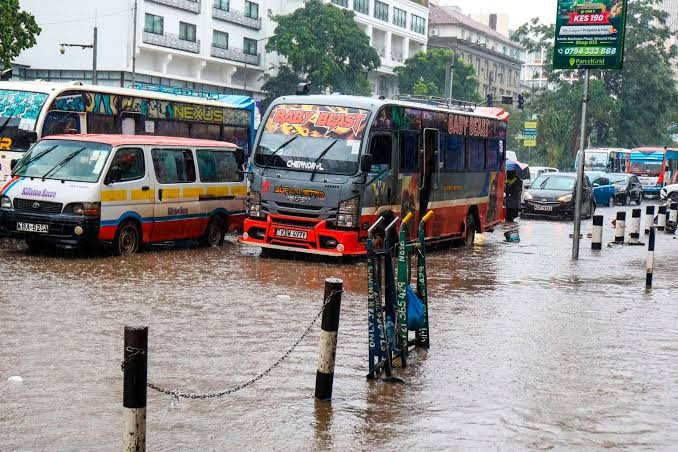
Since December, floods across southern Africa have affected more than 2.36 million people. In Mozambique alone, more than 100,000 people were displaced, some for as long as two months. In March, flash floods killed at least 66 people in Nairobi, Kenya, just as drought devastated herds in northern parts of the country. One pastoralist told reporters he had lost 80 of his 100 animals.
Worse lies ahead. Forecasters have described a very strong El Niño, with temperatures in September crossing the 2°C threshold, and even as we debate the future of the planet here in Antalya, the World Meteorological Organization expects the phenomenon to intensify towards the end of the year. Southern Africa faces the prospect of drought and failed rains, while the Greater Horn of Africa braces for floods, landslides and disease outbreaks. The most severe consequences for food security may not emerge until 2027. El Niño is a natural phenomenon, but the vulnerability it exposes is not. It is unfolding on a planet already heated by decades of greenhouse gas emissions, where communities have too often been denied the finance needed to prepare and protect themselves. And that’s why, in the coming days and across negotiation rooms, adaptation finance must be a defining test of whether multilateralism can deliver for those most exposed to climate change.
The gap is the real measure
The numbers tell a stark story. The United Nations Environment Programme (UNEP) estimates that developing countries will need $310–365 billion annually for adaptation by 2035, yet international public adaptation finance reached just $26 billion in 2023. That means estimated needs are already 12 to 14 times current flows.
Africa faces an especially severe shortfall. The continent needs roughly $70 billion a year but received only $14 billion in 2021–22. And around 57% of that funding came in the form of loans. African governments are already spending more from their constrained national budgets on adaptation than they receive in international support.
At COP26 in Glasgow, developed countries pledged to double adaptation finance to approximately $40 billion a year by 2025. By 2024, flows had reached $34.7 billion, still short of the target. Of the $101 billion in public climate finance provided that year, $68 billion was delivered as loans and just $29 billion as grants. Adaptation continues to receive only around a quarter of climate finance, despite longstanding commitments to balance support for adaptation and mitigation.
The pattern shows that finance remains far below what is needed, commitments are not being met on time, and too much of the support offered adds to the debt burdens of countries already struggling to cope with climate impacts.
Why tripling cannot be the ceiling
At COP30 in Brazil, governments agreed to “at least triple adaptation finance by 2035”. The commitment matters, but its ambition must be judged against the scale of the need. Three issues are critical. First, the commitment lacks an agreed baseline. Without a clear starting point, it is difficult to measure progress or hold governments accountable for delivery. African negotiators are right to insist on a baseline of $40 billion in 2025. On that basis, tripling would mean at least $120 billion annually by 2035.
Second, even $120 billion would cover only a fraction of the estimated requirement. It represents roughly one-third of UNEP’s projected adaptation needs for developing countries. Treating that figure as the final destination would institutionalise a funding gap that is already severe, even as temperatures rise and the costs of adapting to their consequences mount.
Third, the track record gives little reason for confidence. Developed countries have yet to meet their earlier commitment to double adaptation finance. They cannot credibly celebrate a promise to triple support without first demonstrating that they can honour existing commitments. The priority must be to secure, quantify and deliver the tripling commitment. But it must not become a ceiling on ambition. It should be a stepping stone towards meeting assessed adaptation needs, with the scale of finance determined by what vulnerable countries and communities require, rather than what wealthy-country treasuries consider politically convenient.
Build resilience, not debt
How adaptation finance is delivered matters as much as how much is provided. A loan to rebuild a road destroyed by floods leaves a vulnerable country paying for a crisis it did little to cause. When debt repayments compete with spending on hospitals, schools and essential public services, climate finance risks deepening the very vulnerability it is supposed to reduce. The $120 billion annual floor should therefore be anchored in public, grant-based finance, in line with Article 9.1 of the Paris Agreement. Private finance and other mobilised flows under Article 9.3 should supplement this support, not substitute for it. Debt cancellation should also be recognised as an important means of creating the fiscal space countries need to invest in adaptation.
Timing and accessibility matter, too
Finance must reach communities before disasters strike, not years after the damage has been done. In Nepal, a Green Climate Fund proposal to protect communities from glacial lake outburst floods took about seven years to secure approval. Communities cannot afford to wait seven years for protection from climate hazards that may materialise within months. Antalya must therefore prioritise direct access to finance for national and local institutions, alongside stronger support for locally led adaptation. Funding arrangements should enable countries and communities to identify their own priorities and act on them, rather than forcing them through lengthy processes that delay urgent protection.
What Antalya must deliver
Antalya must turn the promise to triple adaptation finance into a measurable commitment backed by clear milestones and transparent accountability. That means establishing a dedicated negotiating space, agreeing on a $40 billion baseline for 2025, setting interim targets, and reporting openly on progress. And governments must recognise at least $120 billion a year by 2035 as a minimum, with public grants at the core of delivery.
But tripling must not become an excuse to sidestep the wider financing gap. Adaptation finance must continue to grow beyond this floor as developing countries’ needs evolve and the consequences of global temperature overshoot intensify. The Global Goal on Adaptation must reinforce accountability by tracking the support actually delivered, without imposing additional conditions or disproportionate reporting burdens on vulnerable countries.
This is a matter of responsibility, not generosity. Countries whose wealth was built through fossil-fuel-driven development have an obligation to support those bearing the heaviest consequences of a crisis they did least to create. It is also a matter of shared interest. Heatwaves in Europe, wildfires in North America and devastating floods across continents demonstrate that climate impacts respect no borders.
Amos Wemanya is a Senior Climate Advisor at Power Shift Africa